The Role of Smart Tooling in Flexible Manufacturing Systems
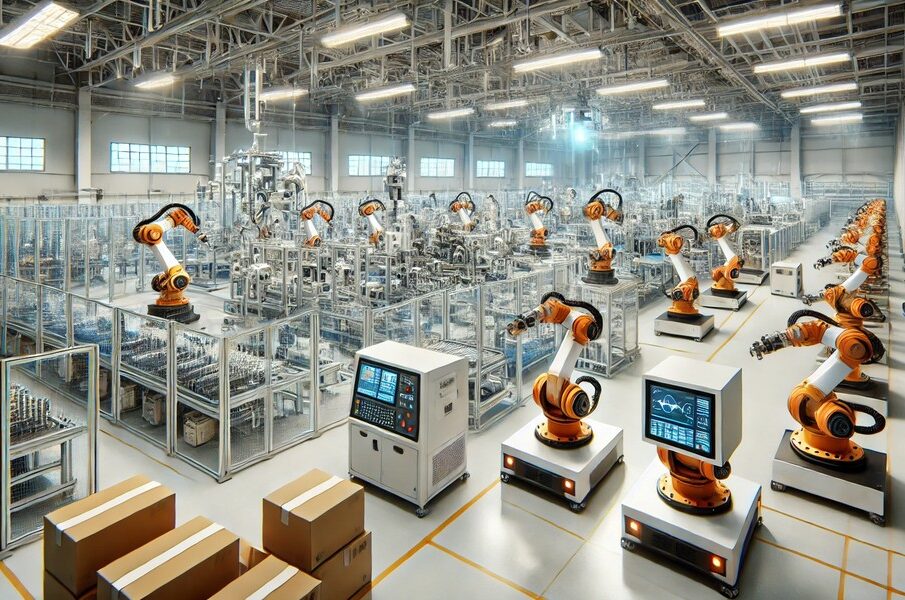
Modern industrial operations are shifting away from rigid, single-purpose assembly lines. Volatile consumer demands, shrinking product lifecycles, and a persistent shortage of skilled personnel mean that industrial facilities must adapt quickly to survive.
To thrive in this landscape, facilities rely heavily on Flexible Manufacturing Systems (FMS)-production frameworks designed to seamlessly adapt to changing product types and varying output quantities. However, many decision-makers overlook a critical reality: a highly sophisticated, multi-axis robotic arm is only as versatile as the tool attached to its end.
The true enabler of flexibility in automated production is smart tooling, the modern ecosystem of intelligent end-effectors, sensors, and software that bridges the gap between hardware capability and process agility.
Moving Beyond Fixed Peripherals
Traditional automation relies on pneumatic actuators and dedicated mechanical fixtures. While highly efficient for high-volume, low-mix production where the same task is performed for years, these conventional tools fail completely when required to adapt to a high-mix, low-volume environment.
Changing a traditional production setup typically demands massive engineering overhead, physical redesigns, and hours of costly downtime to swap out hardware and reprogram code.
Smart tooling completely rewrites this operational dynamic through three core innovations:
- Software-Defined Adaptability: Modern electric grippers, vision systems, and process tools feature integrated microprocessors. This allows operators to adjust parameters like stroke length, clamping force, and acceleration profiles directly from a software interface without touching a physical wrench.
- Integrated Sensing and Feedback: Built-in force/torque sensors and proximity electronics provide real-time haptic feedback. This digital intelligence enables the system to sense part dimensions, detect micro-misalignments, and automatically adjust execution dynamically to prevent part damage.
- Unified Quick-Changers: Standardized physical and digital interfaces allow a single robotic workstation to swap tools automatically within seconds. This capability transforms a machine-tending cell into a packaging or quality inspection station mid-shift.
Maximizing the Agility of Collaborative Hardware
When industrial engineering teams implement collaborative automated cells alongside human workers, the emphasis is often placed solely on the light industrial robotic arm. However, a bare robot arm has no inherent operational capability. The value-adding work happens entirely at the interface where the tool meets the part.
To maximize capital efficiency and achieve rapid return on investment, production facilities must ensure their tooling matches the intrinsic agility of their hardware. Utilizing Onrobot collaborative robots tooling ecosystems provides an open, plug-and-play architecture that eliminates custom engineering overhead.
By utilizing a unified mechanical and electrical interface, production managers can deploy diverse applications-ranging from vacuum packaging and magnetic material handling to precision screwdriving and surface finishing-on a single, flexible platform.
| Robot Platform | → | Unified Interface | → | Intelligent Tool |
|---|---|---|---|---|
| Agile Movement | Quick Changer | Adaptive Tasking |
This structural agility addresses a critical operational bottleneck. When production lines transition to a new product variant, the bottleneck is rarely the robot’s physical reach; it is the time required to configure the end-effector to handle a different geometry, material, or weight. Smart tooling resolves this challenge by storing diverse component parameters directly inside unified application software.
The Strategic Financial Advantages of Intelligent Tooling
Investing in software-driven, adaptive tooling provides clear financial benefits that support long-term operational profitability:
Drastic Reduction in Integration Costs
Traditional robotic deployment can carry an integration cost multiplier of three to four times the cost of the base hardware. This is driven by custom PLC programming, external control boxes, and pneumatic plumbing. Smart end-effectors feature internal controllers and direct digital communication protocols, bypassing complex intermediate hardware and slashing deployment timelines from weeks to hours.
Deterministic Quality and Reduced Scrap
Human operators suffer from fatigue, and conventional pneumatic grippers lack precision control over clamping force. Smart electric grippers maintain exact, repeatable force thresholds, which is crucial when handling fragile electronic components, polished plastics, or delicate automotive parts. Integrated sensors provide immediate error detection, ensuring that a misaligned part halts the process before generating high volumes of expensive material scrap.
Future-Proofing Capital Expenditures
Dedicated mechanical fixtures become obsolete the moment a product design changes. Conversely, intelligent tooling is a decoupled asset. An electric vacuum gripper or a force-controlled sander can easily be redeployed across entirely different product lines or factory sections as market conditions shift, significantly extending the lifecycle of the initial capital investment.
Structuring the Autonomous Factory Floor
The transition to a highly resilient production facility requires looking past the physical structure of a robotic arm to focus on the intelligence at the point of execution. Smart tooling shifts the automation focus from rigid, hardware-centric setups to flexible, software-driven solutions.
By removing custom engineering barriers and embracing intelligent end-effectors, operational leaders can transform unpredictable, manual operational variables into stable, highly predictable engines of output and profitability.
This OnRobot Introduction Video is highly relevant here, as it offers a concise visual overview of how a unified, one-system tooling solution simplifies the deployment and enhances the flexibility of collaborative robotics across diverse manufacturing environments.